
The Monstrous Confessions Of Mark Carney

Canada’s prime minister Mark Carney got up on stage in Davos and admitted the liberal world has been complicit in the breakdown of international law, war crimes and mass atrocities, but that the west was happy to go along with it while the brutality of empire benefitted them.
His speech was showered with praise by the liberal establishment and legacy media who in Carney have found themselves a new hero to make sense of the world.
The elites in the hall gave it a standing ovation. Many outlets including The New York Times and The Guardian, which called it “unflinching realism,” reprinted it in full. The Financial Times labelled it “timely and bold” and said it demonstrated “real leadership.”
And it is worth reading.
But not for the reasons the liberal intelligentsia is crowing about.
Carney’s speech is worth reading for its confessions. For its confession that liberal centrism is an ideology of cynical self-interest, that its symbols are fake, its rhetoric designed to deceive. For its admission that the rules-based order is a lie, that western neoliberal governance is a hideous, hypocritical creation.
In the most revealing section, Carney said:
“For decades, countries like Canada prospered under what we called the rules-based international order. We joined its institutions, we praised its principles, we benefited from its predictability. And because of that we could pursue values-based foreign policies under its protection.
We knew the story of the international rules-based order was partially false. That the strongest would exempt themselves when convenient. That trade rules were enforced asymmetrically. And we knew that international law applied with varying rigour depending on the identity of the accused or the victim.
This fiction was useful. And American hegemony, in particular, helped provide public goods: open sea lanes, a stable financial system, collective security and support for frameworks for resolving disputes.”
Where to start?
First of all, the assertion that the west pursued “values-based foreign policy” under a “rules-based order” because the US protected that order is a joke, unless your values are regime change, invasions and mass murder. If that is the case, then yes, having the US on your side definitely helped you do that. Canada itself has been no stranger to imperial adventures, having participated in numerous acts of barbarism in recent decades, including the invasions of Afghanistan and Libya.
He then says, in the central admission, that the story of the rules-based order was false, a fiction, as he correctly calls it, which only applied selectively (or “asymmetrically” as he euphemistically puts it). But he says this fiction was useful because “American hegemony provided public goods.”
In other words, we did a lot of bad stuff. But we got stuff back.
Good neoliberal stuff. Cargo ships with stuff. Financialised economies which funnelled that stuff to the top.
We got neoliberal economic institutions like the IMF and World Bank which locked in western hegemony and kept all the stuff flowing north, at the expense of the south. These are the ‘frameworks for resolving disputes’ he’s referring to.
These aren’t brave admissions. These are astonishing admissions. Monstrous and depraved.
He’s effectively saying “we participated in a corrupt, imperial order that has double standards foundationally built in, but we did it because, transactionally, it worked for us. We participated in genocide for treats.”
The message really couldn’t be clearer. Yet this message has been lauded for its bravery rather than excoriated for its depravity.
Now perhaps, perhaps, you could make an argument for Carney’s words as bold if the prescription flowing forth had been matched in its boldness.
You could argue for this unflinching diagnosis if the prescription had been equally as stark.
But it wasn’t.
The prescription he laid out was the geopolitical equivalent of ‘meet the new boss, same as the old boss.’ After his bold diagnosis of a broken old order, he described how Canada was building a new order and what proceeded to spill forth from his mouth was a rehashed neoliberal word salad:
“…a comprehensive strategic partnership with the EU, new European defence procurement arrangements…12 other trade and security deals on four continents…building plurilateral trade…a new trading block of 1.5 billion people….free trade pacts with India, ASEAN, Thailand, Philippines and Mercosur.”
Pointing to how he’s building this new world in Canada, he said he’s “cut taxes on incomes, on capital gains and business investment…removed all federal barriers to interprovincial trade…fast-tracked a trillion dollars of investment in energy, AI, critical minerals, new trade corridors…doubling our defence spending.”
A truly visionary future of less tax, more guns, tanks, mines and global neoliberalism! Get on board!
And not one mention of ecological disaster, not one mention that Canada being an energy superpower, as he described it, is dooming billions of people to increasingly unsurvivable futures.
He did at one point say “we need to live the truth…and this means building what we claim to believe in…creating institutions and agreements that function as described…building something better, stronger, more just.”
But we know this is just rhetorical dressing. It won’t mean anything material.
It won’t mean leaving any of the oil in the ground.
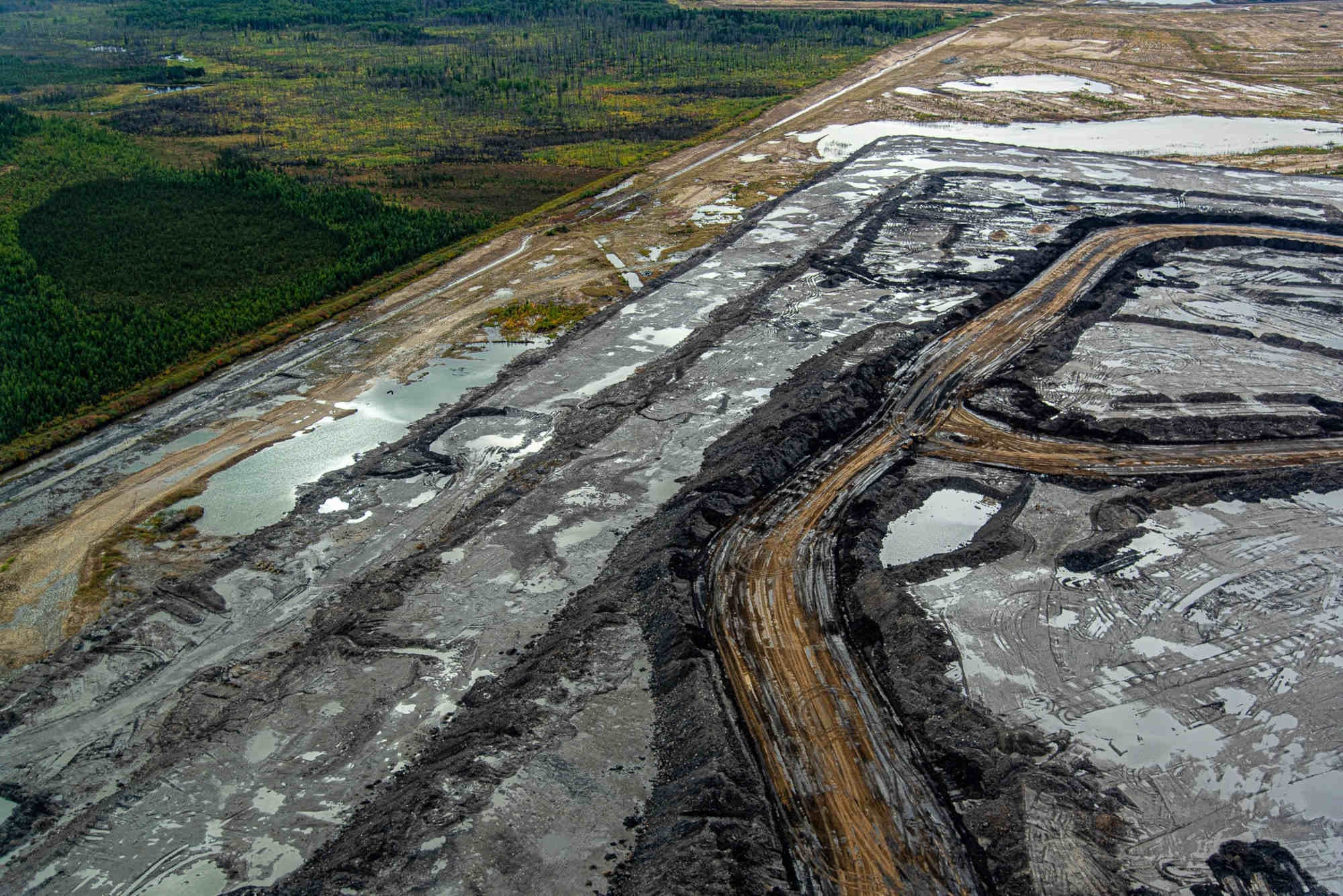
It won’t mean respecting indigenous communities in Canada whose lands and communities have been destroyed by tar sands mining.
It won’t mean Canada reassesses its 2019 trade deal with Israel.
We know this won’t mean prosecuting the forty-nine Canadians known to have participated in the genocide of Gaza.
Appendage of empire
In the last three years Canada’s department of defence has awarded nearly 300 contracts worth $19 billion to American arms firms.
For all Carney’s tough talking about American hegemony and its turn against allies, we know this won’t mean he’ll stop buying billions of dollars worth of American war machinery.
For all his tough talk, we know none of what matters in North America is threatened.
We know it won’t mean Canada halts this reciprocal arms dealing with empire which sees it sell $4.4 billion dollars worth to the US annually.
We know this won’t mean Canada turns its back on its largest buyer of oil and stops selling the US four million barrels a day.
We know it won’t mean Canada rescinds an agreement it updated just a few months ago facilitating cross-border cooperation with ICE.
We know it won’t mean Canada withdraws from Norad and the system of real-time, always-on intelligence sharing with the US.
Carney also said that as a result of the breakdown of international law, countries “…buy insurance, increase options in order to rebuild sovereignty - sovereignty that was once grounded in rules, but will be increasingly anchored in the ability to withstand pressure.”
Again, a selective and contradictory statement.
Sovereignty, as he admitted minutes previously, has never been “grounded in rules,” but grounded in hard power. And we know that he doesn’t believe the enemies of empire should protect their sovereignty with hard power or nuclear weapons.
Carney’s speech was a masterclass in avoiding responsibility for his and the west’s part in the selective application and breakdown of international law.
It was a masterclass in rhetorical sleights of hand, positioned as a fresh vision for the future while rehashing the core tenets of global imperialism and neoliberalism.
Carney is being acclaimed as some kind of righteous truth-teller, but he admitted nothing we didn’t know.
This speech could have been made at any time in the last five, twenty or indeed seventy years.
What we’re seeing now is nothing new. It feels new to the technocratic managers of the global order only because the empire has trained its guns inwards for the first time.
And yet. And yet.
Seeing a neoliberal leader articulating out loud to an audience of elites a worldview that has been the standard anti-imperial critique for many decades is important.
It raises useful tension, increasing the contradictions within the system, making them more visible.
Carney said the international rules-based order is a fiction. On this he was right.
But Carney himself embodies a fiction he’d never mention, because he can’t see.
And that is the fiction that a neoliberal central banker presiding over a critical appendage of empire can help end that empire.
If Carney was serious about challenging American hegemony, he’d stop cooperating with the gestapo across the border, stop buying and selling billions in weaponry, stop wrecking indigenous lands for oil that he sells to the hegemon. He’d sever the military ties and stop signing neoliberal trade deals which benefit empire.
But he won’t, because he’s not serious.
Carney was not challenging the old order as much as he was attempting to rescue that order from Trump.
Carney’s speech is best seen, then, as an attempt to save neoliberalism from its own creation. As an attempt to save neoliberalism from itself.
(If you regularly read and appreciate my articles, if they add something to your understanding of events, do consider upgrading or making a donation. I really do rely on the financial support of my readers to stay afloat. Or sign up free.)
Well stated, as always! As a Canadian, my critical thinking skills snap into overdrive when a speech is universally lauded, but especially when it is lauded by both the average Canadian, who places complete faith in our banker PM and simultaneously by his billionaire neoliberal audience at Davos. If Carney was reading the room, it was the room he gave the speech in.
What else would we expect of a Bank of Canada governor and Goldman Sachs protégée?