
Climate Scientists Say Democracy is Rigged
But you didn't hear about it

In 1988 the climate scientist James Hansen testified to Congress that the era of global warming had arrived and catastrophe could be expected if nothing was done.
It was a testimony that made headlines around the world. Hansen became known as the father of global warming.
This week, in a new paper, he said something equally notable.
And it was completely ignored by the media.
The paper itself wasn’t ignored by the media.
CNN, The Guardian, The New York Times, all ran stories on it. The research warns that Earth’s average temperature will rise nearly 5C when atmospheric carbon dioxide is double pre-industrial levels.
We’re likely to see CO2 reach these levels in 50 to 60 years or so.
Most scientists pin warming at 3C when carbon dioxide in the atmosphere doubles.
If Hansen is right, this is a terrifying, world-ending level of warming. We better hope he’s wrong. Some scientists think he is.
But I don’t really want to talk about that.
I want to talk about what happened when he tried to describe why nothing is being done to stop planetary collapse.
When Hansen tried to do this, the media ignored it.
He said that democracy is rigged.
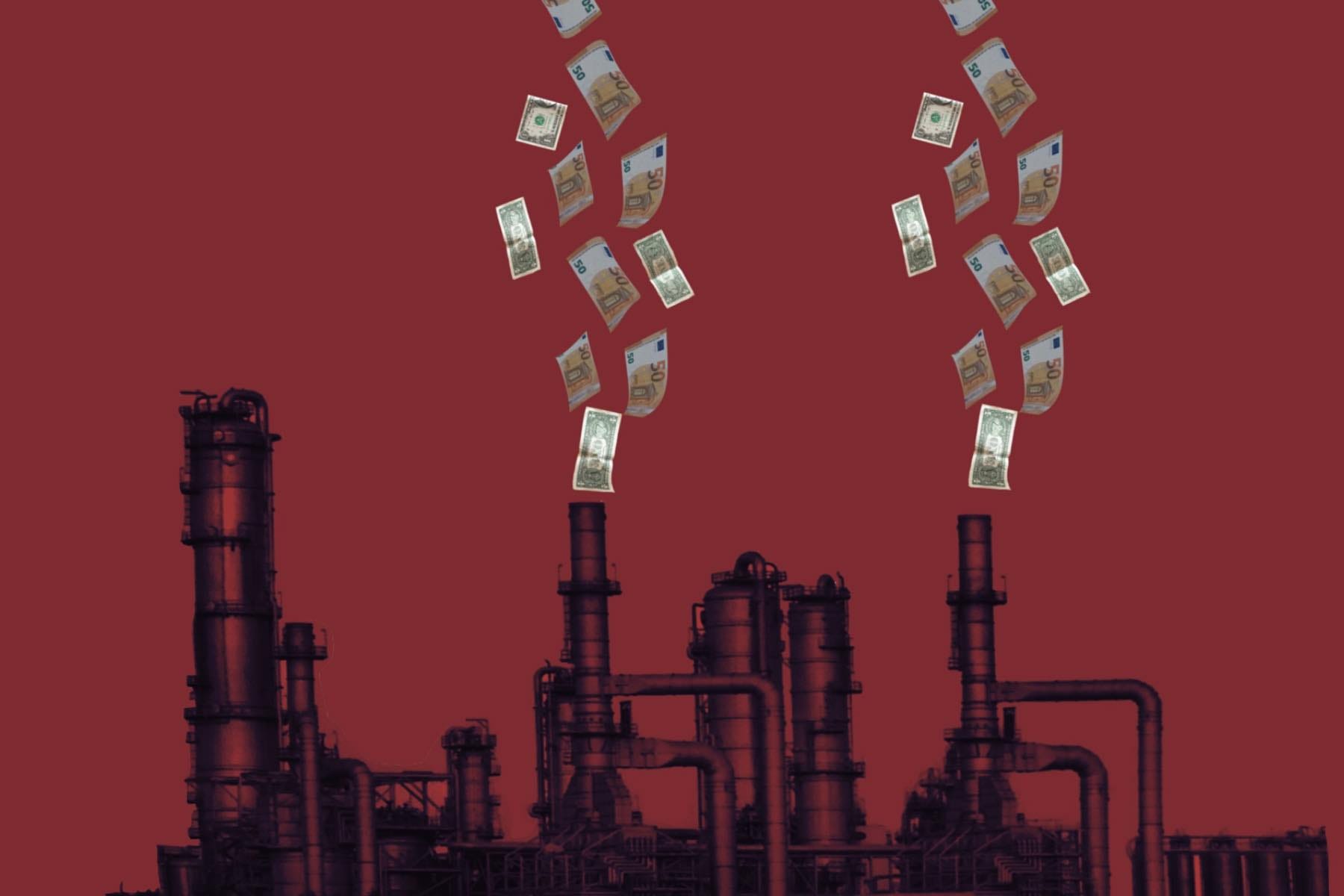
He said politicians have been bought by capitalists and big business:
"The ideal of one person/one vote has been replaced by one dollar/one vote. Special financial interests—the fossil fuel industry, the chemical industry, the lumber industry, the food industry, for example—are allowed to buy politicians. It is no wonder that climate is running out of control, environmental toxicity is in the process of exterminating insects including pollinators, forests are mismanaged, and agriculture is designed for profit, not for nutrition and the public's well-being."
He didn’t say this in an interview. It’s in the press release. Which means reporters definitely saw it. And it means Hansen and his co-authors put it in for a reason. They felt strongly about it. They wanted it to be reported.
But no one did. You can check the stories.
Hansen is right. Not in a theoretical or philosophical sense. This is just what politics is now.
The fossil fuel industry spends tens of millions of dollars a year making sure politicians vote to dig for more oil and gas and build more pipelines.
The biggest chemical companies directed more than $54 million to US senators when a big update to the law on carcinogens and chemicals in household items, toys and drinking water was being drafted recently.
Big meat and dairy companies have spent $2.5 billion in the last twenty years in the US lobbying for weaker rules on pollution, chemicals and greenhouse gases.
In the EU, agribusinesses hosted virtual wine tastings and other events to water down new EU climate regulation.
In Canada it can be hard to know where the government begins and the forestry lobby ends, so integral is cutting down trees to Canada’s economy.
Hansen’s quote could have been a real opportunity for a journalist to make these connections.
But no.
You’ll often see this with climate and ecological stories. While writing about the latest, usually grim science, these stories rarely quote those with ideas for change that fall outside mainstream economic thinking.
Instead they stick to quoting those who have a more comforting script about being able to stave off planetary breakdown with technological tweaks to the system, like more renewables and electric vehicles.
The mass media rarely platform those whose prescriptions for ecological disaster involve fundamentally turning away from a growth capitalist consumer economy and making something new.
A few months ago scientists and academics put on the world’s largest conference dedicated to de-growth ideas. Lots of journalists attended but they were told by their editors not to bother writing any stories. They wouldn’t publish them.
A leading degrowth expert Julia Steinberger tweeted from the conference that journalists had told her “my editor refuses to print any story critical of economic growth.”
This failure to give people access to the much bigger range of ideas that scientists and scholars have for steering us away from collapse is deliberate.
Withholding the alternative perspective Hansen provided us with – an honest analysis of what the barriers to real systemic change are – is a boundary setting practice intended to stop people from imagining a new world.
Because much of the media is here to protect the interests and the profits of the old war. And in that new world, journalism would have to fundamentally change too.
So much mainstream coverage of ecological breakdown and its solutions reinforces the false idea that climate scientists all think roughly the same thing – do clean energy and EVs harder.
Hansen and his co-authors show us that isn’t true.
Climate scientists want us to look at the fundamental failings inherent within corporate-controlled democracies.
To hear about that, you’ll have to go beyond the mainstream press.
All of which is why there will be no human race at the end of the century probably much earlier
Don't forget that fellow climate scientists like Mike Mann (I call people like him climate change neoliberals) attacked Hansen.